Services
Our Hearing Services
From hearing testing to hearing aid fitting to repairs, count on us to help you to experience the sounds of life.
Hearing Aids
As a locally owned practice, our focus is on fitting you with hearing aids are best for your lifestyle and budget. Our priority is our patients.
Hearing Tests
We will perform thorough examinations to determine what kind of hearing loss you have, how severe it is, and what we can do to help it.
Tinnitus Management
Experience instant relief from the ringing, buzzing, or humming in your ears. We will assess your type of tinnitus and present your treatment options.

A Caring Approach
While seeking the best hearing solution for you, Hearing Healthcare Center understands that each ear is unique and requires special attention. That is why we treat our clients with exceptional care, strive for outstanding customer service, and make sure we are always up-to-date with technology. Visit us in Evansville, FL for expert information that will make a difference in your hearing quality and daily life. We look forward to answering all of your questions and giving you a solution that works for you.
what we do
Additional Services
Aural Rehabilitation
The journey from hearing impaired to hearing empowered can seem very challenging, almost overwhelming, if we believe that we are dealing with it alone. It helps to know others understand what we are going through. That’s why group participation also allows people to share coping strategies with one another, which is an excellent opportunity for aural rehab.
What is Aural Rehabilitation?
Hearing loss can have a significant impact on quality of life. That’s why it’s important to learn more about each person’s specific capabilities, needs and best treatment options possible. An audiologist can better understand your own individual requirements through a solid aural rehab program.
Aural rehab, also known as auditory rehabilitation, is a series of treatments and options to help identify and reduce causes or complications related to hearing loss. Steps involved might include personal counseling, coaching and other trainings with a trained audiologist or hearing expert.
What Can You Expect?
In most cases, aural rehab programs can be set up through one-on-one sessions or in a small group setting, based on the person’s preferences. Topics covered often include sensory management, instructions on how to better use hearing aid technology and training to help improve speech over time.
“Aural rehabilitation” is a term that means learning how to hear again. Every hearing-impaired person must do this to one degree or another. We provide individual treatment to each client in our office. We also have a group program for folks who need a little extra encouragement.
Aural Rehabilitation Classes
Our aural rehabilitation class is one-of-a-kind. During this four week small-group discussion format you learn the basics (and more!) of hearing aid use and listening techniques that give you a better communication environment.
Class openings will be posted here or you may call the office for more information.
Call Hearing Healthcare Center, Inc. at (812) 303-4300 for more information or to schedule an appointment.
Communication Counseling
Communication is a two-way street, and there are a lot of signs on both sides of it. Our communication strategies work to educate each communication partner about the expectations and/or limitations that the other experiences. This is not a “one size fits all” approach; we must listen to each client and family member who comes into our office to design a method that works. Better hearing is a fantastic place to start. Better listening is an imperative second step. Let us help you on your journey to better communication.
Call Hearing Healthcare Center, Inc. at (812) 303-4300 for more information or to schedule an appointment.
Swim Molds
Our colorful, custom swim molds are appropriate for every age group. From the avid swimmer to the youngster prone to “swimmer’s ear”, these molds are the perfect solution for keeping water out.
Swim molds are specialized earplugs crafted from waterproof silicone that create an impenetrable seal, never allowing water past the outer ear. They are customized for your ears to ensure a tight, snug fit in the ear canal. Swimmer’s earmolds aren’t just for swimmers; they’re useful for a wide variety of water activities. Custom swim molds are used for activities such as:
- Boating
- Jet skiing
- Canoeing and kayaking
- Rafting
- Paddle boarding
- Swimming
- Bathing and showering
- Attending waterparks
- Doing water aerobics
Custom swim molds offer protection from several major ear-related health problems, including ear infections and surfer’s ear. Ear infections are a problem for patients of all ages, though they’re particularly prevalent in children.
By the time babies reach the age of one, 62 percent have experienced an ear infection. This number goes up to 80 percent by age three and nearly 100 percent by five. Across all age ranges in America, ear infections result in about 25 million doctor’s appointments each year.
There are three main types of ear infections: acute otitis media, otitis media with effusion and otitis externa, which is also known as swimmer’s ear. Ear infections can have several different causes, but water exposure is one of the most prominent. Below is more info about these conditions, as well as exostosis (surfer’s ear).
Acute Otitis Media
This type of ear infection causes pain, fever, redness and sometimes pus in the ear. It is typically treated with antibiotics, although medication isn’t always necessary. Acute otitis media can result from both bacterial and viral infections.
Otitis Media with Effusion
This is the most common type of otitis media. It occurs when there is a buildup of fluid in the middle ear’s Eustachian tube, which then becomes infected. It is hard to detect because it doesn’t often come with painful or noticeable signs and symptoms. Medication is rarely helpful in treating otitis media with effusion, and the ears sometimes need to be drained.
Otitis Externa or Swimmer’s Ear
This is an infection of the outer ear that can cause itching, swelling and pain. Sometimes the condition’s symptoms also include elimination of a pus-like substance. Swimmer’s ear almost always needs to be treated with antibiotics. While this condition isn’t infectious between people, infected water in swimming pools and other water areas is its most common cause. Swimmer’s ear is completely preventable with the use of well-fitting custom swim plugs.
Exostosis or Surfer’s Ear
Exostosis is the name for a condition that causes abnormal bone growth in the ear canal. This bone growth is usually caused by water exposure in combination with cold and wind – conditions that are commonly experienced in many outdoor water sports. Surfer’s ear can result in a blocked ear canal and ear infections. It develops over time, so precautionary measures like swim molds are the best protection for water sport athletes.
Call Hearing Healthcare Center, Inc. at (812) 303-4300for more information or to schedule an appointment.
Custom Earmolds
For people who work or play in noisy environments, it is imperative that they protect their hearing to prevent damage. Whether you need simple ear plugs or custom hearing protection, we can help you.
Custom Earmolds
It has long been acknowledged that noise induced hearing loss can be prevented by wearing earplugs. While there are plenty of good choices available off the shelf, because everyone’s ears are unique the best protection will come from those crafted from custom earmolds.
How Are Custom Earmolds Used?
Custom earmolds are made from impressions of your ear canal and concha (the outer bowl-shaped portion of your ear). They adhere perfectly to the contours of your ears, providing a superior fit and protection.
Custom molds aren’t just made for earplugs; they can be used in a variety of products including headphones, stethoscopes and earpieces. Doctors, nurses, pilots, news reporters, musicians, swimmers, racecar drivers, hunters, concertgoers and construction workers are just some of the individuals who can benefit from custom molds.
What Are Custom Earmolds Made Of?
Custom earmolds are generally made from one of three materials: acrylic, vinyl or silicone. Each has their pros and cons.
Acrylic
Acrylic molds have been around the longest. Hard and durable, they are resistant to shrinking and breakage, and are the easiest to repair or re-mold. Acrylic molds are simple to insert and remove and easily cleaned using mild detergents.
Their biggest disadvantage is their lack of flexibility. They can be difficult to place into narrow or small ear canals, especially those of children. Acrylic molds are also prone to sound leakage and feedback, particularly when the jaw is in motion (e.g., chewing).
Vinyl
Vinyl molds are made of polyvinyl chloride (PVC) and fall in the middle in terms of hardness. They are softer than acrylic molds, making them a better choice for children and older individuals as are fairly easy to insert. A better seal translates to clearer sound for high-gain musical instruments.
On the down side, vinyl molds tend to shrink, harden and discolor over time; they also need to be replaced more often. Because of the manufacturing process, which involves boiling in a saline solution, vinyl molds are not recommended for people with allergies.
Silicone
Silicone molds are the softest of all varieties. They are extremely flexible and comfortable, provide a tight seal for excellent sound quality and protection, and are very durable. They maintain their shape and size over time and are available in a variety of bright colors and designs, as well as flesh-colored tones.
There are also disadvantages to their flexibility and softness; silicone molds are difficult to insert, especially when new, and are a poor choice for individuals with soft or flaccid ears.
Call Hearing Healthcare Center, Inc. at (812) 303-4300for more information or to schedule an appointment.
Musician's Earmolds
Exposure to loud music is one of the leading causes of noise-induced hearing loss. Musicians spend many hours practicing and performing and depend on good hearing in order to compose their music. Unfortunately, consistent exposure to loud music carries a high price.
Damaging sounds can lead to a host of hearing disorders including long-term hearing loss, tinnitus and more. Musicians earplugs can help prevent noise-induced hearing loss while allowing musicians to enjoy the music and reduce their risk of developing permanent hearing damage.
What Makes Musician’s Earmolds Different?
Unlike traditional earplugs that block out noise, resulting in music and speech that is muffled or distorted, musician’s earplugs are high-fidelity, meaning they reduce sound levels evenly while keeping the original quality of the music intact. This translates to music and speech that is clear and natural, and allows musicians to hear their own instruments and how well they blend in with the other band members.
Musicians earplugs are made up of a diaphragm and earmold that work together to produce attenuation (reduction in sound) that is smooth and flat across the entire frequency range. Many feature interchangeable attenuators that provide multiple levels of sound reduction for different listening situations (e.g., private rehearsals vs. full-scale concerts).
They can be used in place of loudspeaker monitoring systems, which typically crowd the stage and increase noise levels significantly. Despite their name, these earplugs aren’t solely for the use of musicians; they also benefit concertgoers, allowing them to enjoy live performances while protecting their hearing. Musicians earplugs can be used in other noisy environments such as airshows and sporting events.
In-ear monitors for musicians bring them closer to the balance of the music and move them away from the noise of the amplifiers. Custom products are just an ear mold impression away. This appointment only takes about 15 minutes. Custom molds also work well for iPods, cell phones, and stethoscopes.
Call Hearing Healthcare Center, Inc. at (812) 303-4300for more information or to schedule an appointment.
Earwax Removal
Causes of Earwax Blockage
A blockage of earwax is usually caused by an overproduction of earwax or insufficient cleaning. Surprisingly, the most common cause of a blockage is incorrect at-home earwax removal. Often, instead of cleaning out the earwax it is just pushed deeper inside the ear. Earphone and ear plug usage can also cause wax buildup, as the earphones can prevent earwax from naturally coming out of the ear canal.
Symptoms of Earwax Blockage
Earaches, a feeling of fullness in the ear, hearing loss and ringing in the ear (tinnitus) are all common signs of earwax blockage. If the earwax is not removed an infection can develop. This would include severe pain in the ear that does not subside and a fever. If you are experiencing any of these symptoms, you should talk to your ENT doctor, as these may also be signs of a more serious condition.
Video Otoscopy & Cerumen Removal
Through the use of video otoscopy, we are able to show you the inner workings of your ear. For some clients, the cause of a hearing deficit may be attributed to excessive wax build-up. We can use the video otoscope to visualize on a large screen the outer ear, ear canal, and eardrum. If cerumen build-up is the problem, then you can watch (in full color) as the audiologist removes the blockage.
Did you Know?
Frequently Asked Questions
What Can I Expect At My First Visit?
This is the question we are asked most frequently.
Hopefully this video helps to answer that question!
Hearing Aids
How long do hearing aids last?
The average life span for a hearing aid is 3-5 years. Technology changes so rapidly that after 5 years a computer is obsolete. Advances are being made in hearing technology, as well. Manufacturers will not repair a hearing aid that is over 5 years old.
Can I have my older hearing aid repaired?
Of course! We use an all-make repair lab that will evaluate each hearing instrument as it comes in and make a determination as to whether or not it can be repaired. If the lab says “no”, or if the cost is going to be more than originally discussed, then we will give you a call to discuss further options.
I got my hearing aid wet! Now what?
Do hearing aids really work?
Yes, they do, but they’re a tool. And like any tool, you must have the right ones and you have to learn how to use them. Dr. Graves will help you find the right tools and our Aural Rehab class will teach you how to use them.
I have tinnitus. Can hearing aids help me?
Other Products & Services
Where can I find out more about Hearing Healthcare Center?
Please click here visit our YouTube Channel for Informative Videos About
- Wax Removal
- Patient Testimonials
- Hearing Aid Fitting Videos
- Instructional & How-to Videos
What are swim molds & who needs them?
What is aural rehabilitation?
Who needs hearing protection?
Hearing Testing
Why should you have your hearing tested?
Why Have Your Hearing Tested?
Untreated hearing loss can damage your physical health, emotional well-being and professional success. Studies have shown it:
- Hearing aids decrease listening (related) fatigue.
- Research indicates a two to three times increased risk of falls in older adults, with even mild untreated hearing loss.
- Hearing aid use can improve working memory performance in adults, compared to not using hearing aids.
- Adults with untreated hearing loss are more likely to report emotional loneliness/a lack of perceived emotional support.
- Wearing hearing aids improves social engagement/activity amongst adults with hearing loss.
A Hearing Test Is Quick, Painless and Provides Immediate Results.
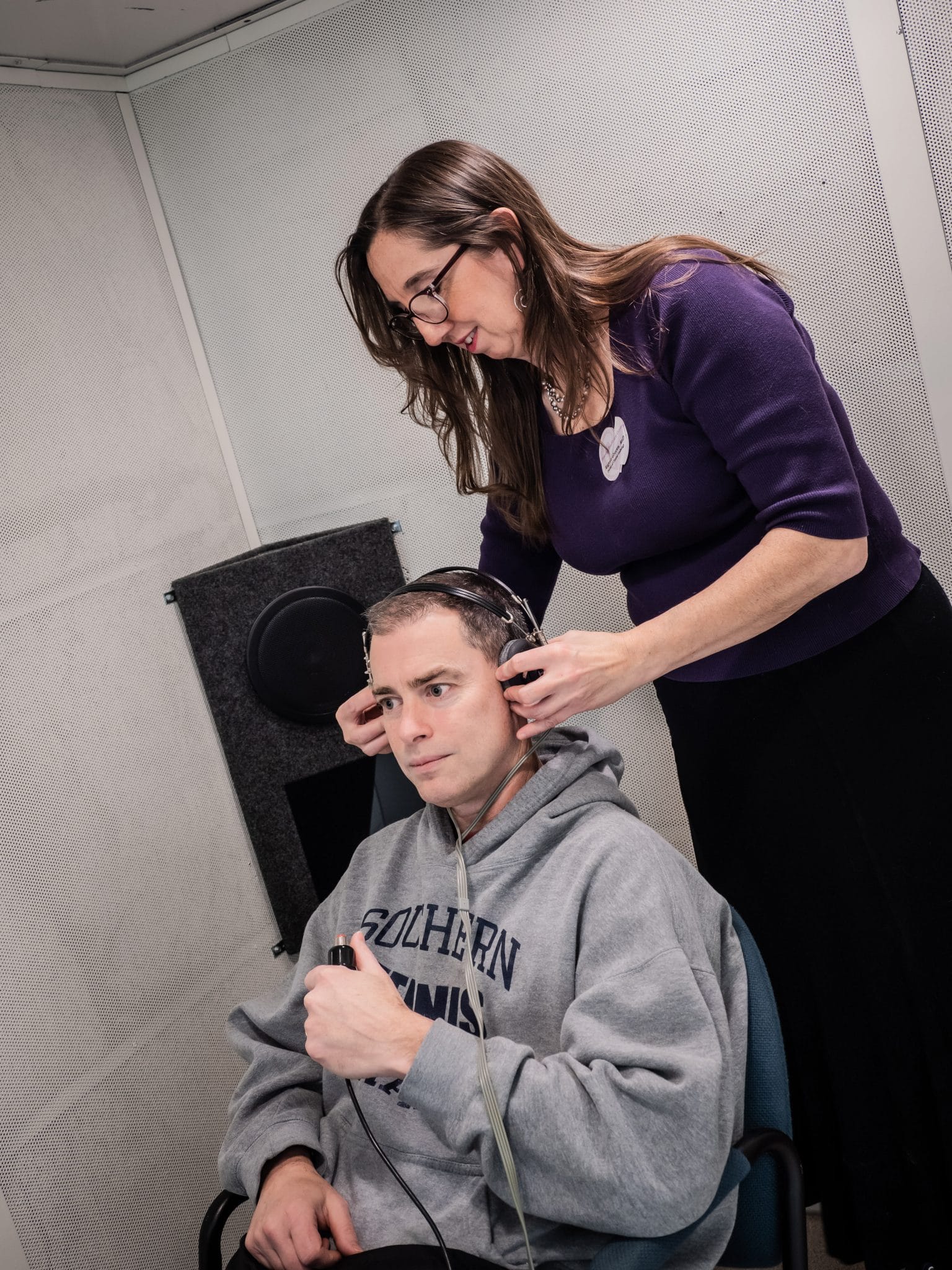
Whether you just need a hearing screening or an audiological assessment, testing methods are fast and same-day test results typically allow an audiologist to provide an immediate diagnosis.
What does an audiologist measure?
What Does an Audiologist Measure?
- How your ears respond to loud sounds
- The quietest sound you can hear at different pitches
- How well you can hear speech
- The movement capacity of your eardrum
- What type of hearing loss you have
What happens during a hearing test?
Insurance & Pricing
What's the deal with insurance?
At Hearing Healthcare Center, we do not accept insurance. Wait! Don’t stop reading, yet! The REASON we will not accept insurance payments is because we believe there is a better way. We believe the insurance business is broken and has caused healthcare costs to skyrocket in this country.
Big insurance companies dictate what payments will be made to service providers. By doing this, they also tell many practices what they have to charge all their clients. If I agree to accept what an insurance company pays, then I have to charge more somewhere else to make ends meet. For example, one well known company has a plan that pays the service provider “up to 80% of the allowed amount”. The “allowed amount” is 50% of the billed amount. If the provider wants to cover all his own expenses, he needs to charge twice as much (plus 20%) as he should so he can take the loss. Insurance companies also require that everyone be charged the same — no preferential billing. I’m okay with not showing partiality, but that means everyone gets charged way too much!
So, what happens if a client is charged only what he should be charged? He pays only what he owes. Then, he can turn in the receipt to his own insurance company for a “rebate” of sorts. We can give you the codes you need to file with your carrier. We’ll even print the form for you. All you have to do is complete the information and send it in. Everyone still gets charged the same, and no one has to pick up the tab for anyone else. At least, that’s the way we think things ought to work.Thanks for reading to the end. I hope you found this information helpful. If you have any further questions, just give us a call.
What is unbundling?
At Hearing Healthcare Center, we are going to provide you with the BEST service anywhere and very competitive prices. Since we separate the cost of the product from the service, you will pay for each piece of the pie you need. When prices are bundled, all the service you could possibly need is charged at the time you get the hearing aid.
But, what if you don’t need all that service? What if you have worn hearing aids for a while and have already learned how to adjust to them? What if you only need adjustments during the trial period and your regular six month checks? Well, then you have paid for some services you will never use. Unless, of course, you are getting your service from Hearing Healthcare Center. At your fitting appointment your invoice will list the hearing aids, a fitting fee, batteries, the Dri-Aid kit, a warranty, and regular six month checks. That’s it! Any further service you may need will be charged at the time you take advantage of it.
A lot of places will give away “free” hearing tests, or “free” cleanings. In bundled pricing, there are no real freebies. In unbundled pricing, there are also no freebies. You just know it upfront.For example, let’s say you spend $4,500 on a pair of bundle priced hearing aids. That same pair unbundled would run you about $3,400. That leaves us with somewhere between 16 and 18 visits in the next two years. Not everyone is going to use all that service. So, why should everyone be charged?This type of transparent pricing is a little bit different. But, it is our hope that you will see different as better when it comes to getting the best service for your hearing healthcare needs.
At Hearing Healthcare Center, we do not accept insurance. Wait! Don’t stop reading, yet! The REASON we will not accept insurance payments is because we believe there is a better way. We believe the insurance business is broken and has caused healthcare costs to skyrocket in this country.
Big insurance companies dictate what payments will be made to service providers. By doing this, they also tell many practices what they have to charge all their clients. If I agree to accept what an insurance company pays, then I have to charge more somewhere else to make ends meet. For example, one well known company has a plan that pays the service provider “up to 80% of the allowed amount”. The “allowed amount” is 50% of the billed amount. If the provider wants to cover all his own expenses, he needs to charge twice as much (plus 20%) as he should so he can take the loss. Insurance companies also require that everyone be charged the same — no preferential billing. I’m okay with not showing partiality, but that means everyone gets charged way too much!
So, what happens if a client is charged only what he should be charged? He pays only what he owes. Then, he can turn in the receipt to his own insurance company for a “rebate” of sorts. We can give you the codes you need to file with your carrier. We’ll even print the form for you. All you have to do is complete the information and send it in. Everyone still gets charged the same, and no one has to pick up the tab for anyone else. At least, that’s the way we think things ought to work.Thanks for reading to the end. I hope you found this information helpful. If you have any further questions, just give us a call.
Specialty Testing & Rehabiliation Services
Tinnitus
Tinnitus Evaluations
They said nothing could be done.
They said you would just have to live with it.
If you or someone you know has been told this …They were wrong!
Tinnitus treatment does exist. Hearing Healthcare Center wants to share an alternative to what they have to offer.
There are a number of tools and devices that we can utilize for your benefit.
To begin the treatment process we will:
- Complete a diagnostic hearing and tinnitus evaluation.
- Gather information about the ringing or buzzing you hear.
- Develop your own personal care plan.
It won’t happen over night. But, with the proper groundwork, we believe we will be able to help the Tri-State’s tinnitus sufferers.
What is Tinnitus?
Tinnitus is often described as a ringing in the ears, but can also sound like hissing, buzzing, roaring, sizzling, clicking or other noise. Tinnitus can manifest as an acute symptom lasting just a few days or a chronic or recurring symptom lasting weeks, months or years.
Tinnitus is a symptom of a wide range of health conditions, and it can occasionally point to a more serious problem that needs professional medical attention. That is why trying to identify a cause is essential, even though it may not be possible.
During a tinnitus evaluation, an audiologist will typically administer:
- An in-depth review of your medical history
- A complete physical examination of your auditory system
- A pure tone audiometry test
- Speech reception and word recognition tests
- An otoacoustic emissions test
- Additional tests, studies and evaluations
If you’re one of the five percent of Americans suffering from tinnitus that is “moderately to significantly annoying,” it’s a great idea to visit a hearing specialist for an evaluation. Our team of audiologists is equipped with many tools and strategies to help patients with tinnitus, but we need first to assess your condition.
What to Expect During an Evaluation
When evaluating a patient with tinnitus, we have several goals we hope to accomplish:
- Identify the underlying cause of your tinnitus symptoms
- Determine if your tinnitus is subjective or objective
- Evaluate how your tinnitus is affecting your ability to understand speech
One of the goals of an evaluation is to rule out what is not causing your tinnitus symptoms. Some common causes include hearing loss, ear bone changes, inner ear disorders, blood pressure changes due to an underlying condition and even certain medications.
Hearing Assessments for Tinnitus
Audiometric evaluations for tinnitus typically focus on high-frequency sounds between 2000 and 4000 Hz. An otoacoustic emissions test can provide a strong indicator for tinnitus as studies have found emissions can be diminished in those with tinnitus and hearing loss.
Tinnitus Retraining Therapy
While there is no known cure for tinnitus unless the underlying cause can be identified, audiologists have developed some outstanding tinnitus treatment programs and methods in recent years to help patients with chronic tinnitus.
What is Tinnitus Retraining Therapy?
Tinnitus retraining therapy (TRT) is one of our highest recommended treatment plans. TRT centers around tinnitus counseling, which aims to teach you about your condition and how retraining techniques and sound enrichment can alter the way you react to and perceive the sound of your tinnitus.
There are three major components to tinnitus retraining therapy:
- An evaluation of your daily habits and history.
- The fitting and use of broad-band noise generating devices that help cancel out or muffle tinnitus auditory frequencies.
- Therapeutic training to help you learn how to manage and ignore tinnitus symptoms.
What to Expect from TRT
If you and your audiologist determine that retraining therapy is the best option for treating your tinnitus, we’ll set up a counseling schedule for you. You can expect to visit our office regularly as you begin TRT.
The duration of TRT differs from patient to patient, but the counseling is consistently effective for our tinnitus patients and is proven to provide both short-term and long-term results.
Counseling Sessions
Your audiology specialist will teach you what tinnitus is and how your perception of it affects the way you react to the sounds. As you progress, you’ll learn more about methods for changing how you perceive tinnitus. As your reactions to tinnitus are altered through counseling and education, you’ll become less and less aware of your symptoms.
Behavioral Therapy
In addition to standard counseling, behavioral therapy is frequently used to help tinnitus patients manage their emotional reactions to their symptoms. Learning emotional coping techniques and developing a range of strategies you can deploy can help to reduce the side effects of tinnitus. These side effects can include depression, insomnia and fatigue.
Retraining Exercises
Retraining exercises can reduce your reaction to tinnitus, decrease your awareness of the sound and eventually eliminate any feelings of annoyance associated with tinnitus. During counseling, your audiologist will walk you through retraining exercises you can implement at home and may refer you to a counselor for additional behavioral therapy.
Sound Enrichment
Avoiding silence is a crucial part of successful retraining therapy. You aren’t limited to behind-the-ear wearable devices and many choose to use various mediums, including mp3 files, smartphone apps and sound generators.
Our knowledgeable and experienced audiologists will help you select the best sounds that mask your tinnitus effectively but aren’t annoying or intrusive. Common options include:
- White noise
- Gentle music
- Nature sounds
This is important since your hearing devices will play the selected sounds 24 hours a day.
How Does Sound Enrichment Work?
Sound enrichment can help you naturally quiet or completely filter out the sounds that your tinnitus cause. Tinnitus therapy works best when the sounds used for retraining are just a little quieter than the tinnitus symptoms.
You Aren’t Alone with Your Tinnitus
You aren’t alone. We understand how isolating tinnitus can be and we can help you take the next step in your tinnitus management. A thorough evaluation is the first step so our specialists can determine if your tinnitus has a physical cause.
In some instances, tinnitus may be cured. But for most, the treatment option is based on managing the tinnitus. We will help you find the resources, additional specialists, devices and tools you need to manage your tinnitus symptoms successfully. You aren’t alone. Call us today.
Call Hearing Healthcare Center, Inc. at (812) 303-4300for more information or to schedule an appointment.
Tinnitus Management
There is no universal cure for tinnitus, but treatments can help make it less of a distraction. Because tinnitus is a side effect of an underlying condition, identifying the problem may lead to a medical or surgical solution. The cure rates for pulsatile tinnitus are relatively high once your specialist identifies the problem.
Unfortunately, in many cases, doctors cannot find the exact cause of tinnitus. However, you can often manage symptoms successfully through several different strategies.
Acoustic Therapy
Acoustic therapy is the use of sound with the intent to alter the tinnitus perception and reactions for clinical benefit. Often, sounds are used to cover up, or mask, tinnitus. Electronic devices that produce white noise, air conditioners, fans and soft music can all be employed.
You can employ a range of sound therapy options, including audio files, sleep noise generators, tinnitus-specific earbuds and more. These acoustic therapy methods help to habituate a tinnitus sufferer to their symptoms by reducing the contrast between the tonal sounds they hear and their environment. This allows the brain to blend and mask tinnitus sounds with natural and therapy added environmental noises.
Tinnitus Retraining Therapy
This is another approach to acoustic therapy; tinnitus retraining therapy utilizes a portable sound generator that produces soft patterned tones to help desensitize the brain to the sounds of tinnitus.
One of the latest iterations of tinnitus retraining therapy is called acoustic neuromodulation. Using a combination of computer software, self-reporting and ongoing hearing tests, a specialist can create a custom tone profile designed to treat your specific tinnitus tones. The profile can be adjusted as needed over time.
Hearing Aids
A standard treatment option utilizes hearing aids, as nearly 90% of those with tinnitus also experience hearing loss. Hearing aids are used to amplify background sounds, which can mask tinnitus. These devices can also help you distinguish one sound from another, improving communication and helping with focus and concentration difficulties. Many hearing aids come packaged with noise generators to replace ambient sounds if amplification alone does not reduce tinnitus.
Counseling
Counseling and cognitive behavioral therapy (CBT) can be practical in helping you manage your tinnitus symptoms by reducing the stress, anxiety and sleeplessness that are often associated with tinnitus.
Behavioral therapy can be effective and provide a range of coping skills to help you manage tinnitus symptoms and the associated stress and depression that often accompany the condition.
Call Hearing Healthcare Center, Inc. at (812) 303-4300 for more information or to schedule an appointment.